

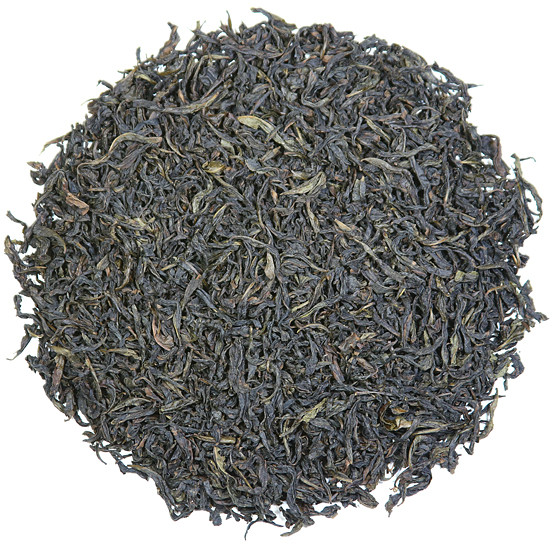
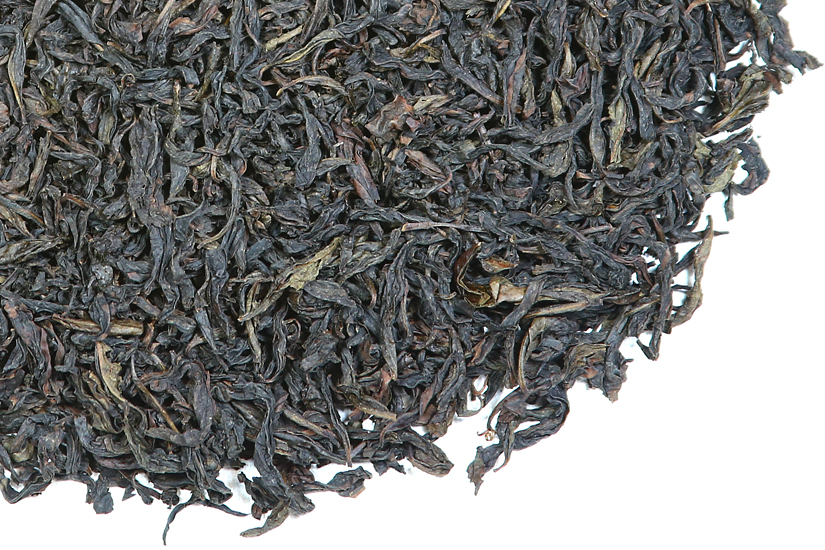
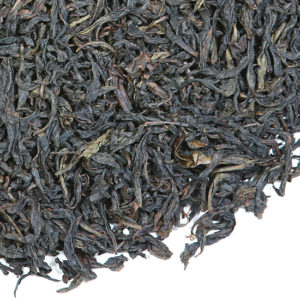
When we tasted this tea Bob said: “This is the most interesting oolong I’ve tasted in years.” That’s quite something coming from someone who tastes a lot of oolong tea (of all styles) throughout the year. And also quite something for this particular Da Hong Pao which is different in style and taste from the traditional Da Hong Pao oolongs that we also sell.
This tea is lightly oxidized and lightly roasted, which means that the flavor of the tea reveals more detail and nuance, even in the earlier steepings that often do not show well. Reduced roasting also means that one tastes more of the flavor of the tea leaves and less of the taste of the oxidation and high firing.
Da Hong Pao Golden has big body and generous mouth feel, with hints of dark green vegetables such as kale or green-rind winter squash in the taste. It is pleasantly floral but not overly so and as such is a nice bridge between the very floral strip style oolongs such as Taiwan Baozhong and the usually austere strip style Wu Yi Shan yan cha oolongs.
So, we love this tea because it is delicious and easy to steep. And easy to love. The tea liquor is mouth filling and the flavor has a nice returning aftertaste. The aroma is lightly floral and pretty. We did not discern any astringency but did become rather obsessed with a pleasant, mysterious flavor that we could not put words to.
Why is this Da Hong Pao Golden different? Well first, the location of the tea bushes. This tea is made from old growth Da Hong Pao tea bushes that grow in Tong Mu Guadun Village in northern Fujian Province. This area is the home of several famous hong cha black tea such as Jin Jun Mei and Zheng Shan Xiao Zhong.
This area is in the center of the pristine Wu Yi Nature Reserve which is located to the north of the Wu Yi Shan range. Although the Wu Yi Shan is the most famous place for Da Hong Pao, the primeval bamboo and pine forests of the nature reserve make this a special place for tea bushes to thrive. Visitors are kept to a minimum here – when we were invited to visit the Tong Mu area our vehicle was still required to pass through several gated and heavily-guarded checkpoints on the way up the mountain before we were given clearance to proceed on to the tea growing area.
The bamboo and pine forested soil in the nature reserve is rocky but richer than that of the main Wu Yi Shan area, whose soil is comprised of layers of limestone shale and not much soil.Tong Mu has a higher elevation and a colder climate, two conditions that encourage tea bushes to grow more slowly while developing more amino acids and hence more sweet, fruity flavors in the leaves. This tea producer most likely felt that lighter processing would be a better match for his fresh leaf than the generally heavier roasting style of the Wu Yi Shan oolong producers.
We agree with his choice. While this tea may not have the mineral-rich austerity and penetrating flavor that traditional Da Hong Pao is known for, it is nevertheless a delicious Da Hong Pao with nuances of flavor that yield a lovely cupping experience. There is much obsessing among tea geeks about exactly where in the Wu Yi Shan a certain batch of this or that Da Hong Pao grew, the age of the plants, and many other details about these teas. Da Hong Pao are difficult to appreciate here in the US because we do not often have many choices for tasting and comparing ast tea drinkers in China do.

Bob & Mary Lou at the stone marker in Tong Mu announcing this place as the original home of Lapsang Souchong tea
Want to know more?
 China’s Famous Tea
 Wu Yi Shan Oolong: yan cha