

Skip to content
  • Tea Trekker is Closed for ordering - informational site only
  • Subscribe

    Blog sign up

    Subscribe

    Subscribe to our blog to receive notifications of new posts by email.

  • Blog
  • Tea Trekker is Closed for ordering - informational site only
Tea TrekkerTea Trekker
  • Login
  • Menu
  • Home
  • Learn About Tea
    • Tea Education
      • What is Tea?
      • The Six Classifications of Tea
      • Steeping Tea
      • Selecting & Storing Tea
      • Healthful Benefits
      • Traditional Tea vs Commodity Tea
      • New Tea, Rested Tea & Aged Tea
      • Fresh Spring Tea
    • Places of Note
      • China Famous Tea
      • Wu Yi Shan Oolong: yan cha
      • High Mountain Gao Shan
      • Higashiyama Tea
      • Kagoshima Tea
      • Shizuoka Organic Tea Farmers Union
      • About Jun Chiyabari Garden
      • Darjeeling Tea Protected Origin Status
    • Teawares
      • Teapots
      • Teacups
      • Matcha Bowls and Whisks
      • Gaiwans
      • Teaware Accessories
  • Tea by Country & Type
    • Tea by Country
      • Ceylon
      • China
      • India
      • Japan
      • Nepal
      • Taiwan
      • Other Countries
    • Tea by Type
      • Black Tea
      • Green Tea
      • Oolong Tea
      • Pu-erh Tea
      • Hei Cha
      • White Tea
      • Yellow Tea
      • Jasmine, Scented & Smoked
      • Tea Trekker Blends
      • Organic Tea
  • About Tea Trekker
    • About Us
    • Our Books
    • Stories from our Tea Trips
    • What Others Have Said About Us
    • Our Published Articles
    • Photo Gallery
    • Tea Trekker is Now Retired
  • Our Blog
Home / Types / Pu-erh Tea / China Sheng Pu-erh
  • Langang Fang Zhuan shou pu-erh brick
  • Myanmar Kokang Mei Hua 2006
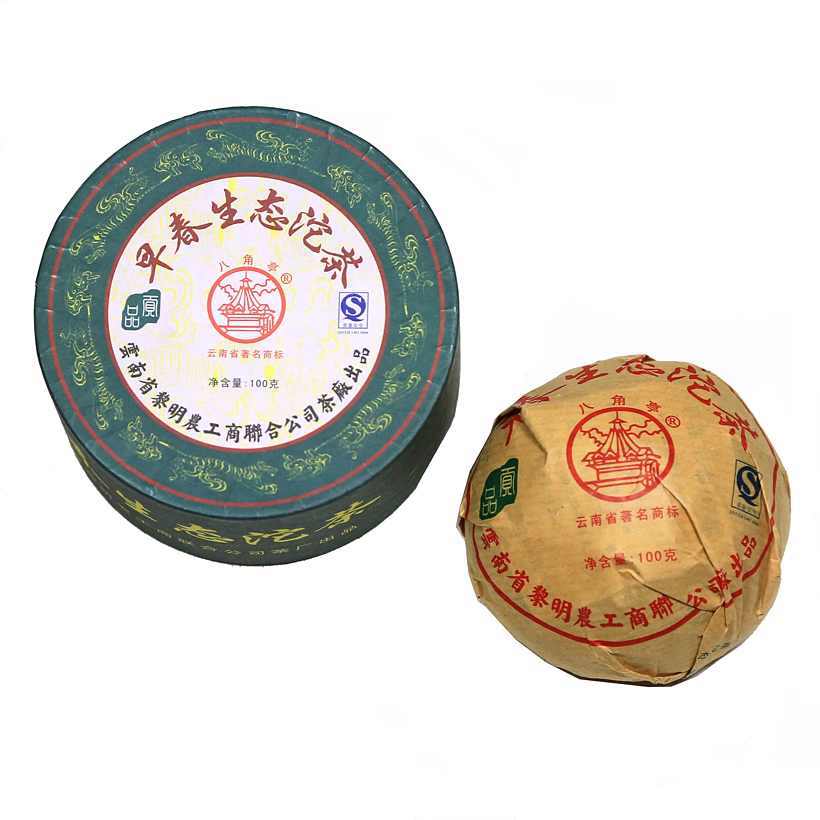
Linming pu-erh tuo cha

Liming Sheng (un-fermented) Pu-erh Tuo Cha

Pu-erh Tea

Origin:  Menghai County, Xishuangbanna Prefecture, Yunnan Province, China


NO LONGER FOR SALE
----------------------------
Categories: Aged & Rested Tea, China Sheng Pu-erh, China Tea
Browse Tea
  • Black Tea
    • Ceylon Black Tea
    • China Black Tea
      • — Keemun Black Tea
      • — Lapsang Souchong Black Tea
      • — Yunnan Black Tea
      • — Other Regions Black Tea
      • — All China Black Tea
    • India Black Tea
      • — Assam Black Tea
      • — Bihar Black Tea
      • — Darjeeling Black Tea
      • — Nilgiri Black Tea
      • — Sikkim Black Tea
      • — All India Black Tea
    • Japan Black Tea
    • Nepal Black Tea
    • Taiwan Black Tea
    • All Black Tea
  • Green Tea
    • China Green Tea
    • Japan Green Tea
      • — Fukuoka Green Tea
      • — Matcha
      • — Shizuoka Green Tea
      • — Uji Green Tea
      • — All Japan Green Tea
    • Nepal Green Tea
    • All Green Tea
  • Oolong Tea
    • China Oolong Tea
      • — Fujian Semiball-rolled Oolong
      • — Fujian Strip-style yan cha Oolong
      • — Guangdong dan cong Oolong
      • — All China Oolong Tea
    • Nepal Oolong Tea
    • Taiwan Oolong Tea
    • All Oolong Tea
  • Pu-erh Tea
    • China Sheng Pu-erh
    • China Shou Pu-erh
    • All Pu-erh Tea
  • Hei Cha
  • White Tea
    • China Fujian White Tea
    • China Yunnan White Tea
    • Nepal White Tea
    • All White Tea
  • Yellow Tea
  • Jasmine, Scented & Smoked
  • Tea Trekker Blends
  • Organic Tea
  • 2021 Spring Tea
Browse Teaware
  • Teapots
  • Teacups
  • Matcha Bowls and Whisks
  • Gaiwans
  • Teaware Accessories
  • Description
  • Harvesting Season:
  • Steeping Instructions:
  • Map:
  • About Pu-erh:

The Liming Tea Factory is highly regarded in China but is not very well-known in the West.  Their yearly output of Pu-erh is small but it is always elegantly blended. Liming is also known for their sheng tai – tea made from raw materials that are organically or naturally grown.

This tuo cha is made under the Liming Ba Jiao Ting trademark, which is named for the Ba Jiao Ting Buddhist Octagonal Pavilion, a valuable meeting place built in honor of Sakyamuni, the founder of Buddhism (hence the image on the box and wrapper).

This tuo cha has the classic Liming raw Pu-erh style. It is a mix of young leaf and many buds, which give the tea lightness and spring sweetness that is most enjoyable. The aroma is slightly reminiscent of ripe red berries.

Ready to drink now or good for setting aside to age.


Harvesting Season:

2007 Spring

Steeping Instructions:

Note on Steeping Pu-erh:


Pu-erh is traditionally ‘rinsed’ before being steeped. This is done with a quick application of hot water that is poured over the tea in the gaiwan or teapot and then immediately discarded. The rinse water is not drunk – its purpose is to help the leaves begin to open during steeping. Use additional appropriately-heated water for the 1st steeping and subsequent re-steepings.


Western-style steeping in a medium-large sized teapot 25-32 ounces:


Carefully scrape the tuo cha to loosen the leaves
Use 2 teaspoons (3 grams) of tea per 6 oz water
Use water that is 200°F-210°F
Rinse the tea in your teapot with a quick application of hot water
Immediately discard this liquid
Add additional hot water to start the 1st steeping
Steep for 3-4 minutes
Re-steep this leaf 1-2 additional times


Asian-style steeping in a small teapot under 10 oz or in a gaiwan:


Use 1 Tablespoon to 1.5 Tablespoons (6 grams) of tea per 6 oz water
Use water that is 200°F-210°F
Rinse the tea in your teapot with a quick application of hot water
Immediately discard this liquid
Add additional hot water to start the 1st steeping
Steep for 25 seconds
Increase the steeping time an additional 5 to 10 seconds with each re-steep
Re-steep this leaf 4-6 times (or more!)

Map:

About Pu-erh:

Unlike most other tea, Pu-erh is made from mao cha and not directly from fresh leaf.
So what is mao cha? Mao cha is a simple ‘rough’ manufacture of leaf materials that consists of:


plucking
withering (indoors and or outdoors)
firing
rolling & shaping
sun-drying


Mao cha is considered both finished tea and half-made tea. It is essentially young sheng Pu-erh and is drunk by villagers in Yunnan as well as being the leaf that all Pu-erh is made from. Mao cha is simple to manufacture but is complex in its diversity. It can be made from the fresh leaf of one tea garden or be a blend of leaf from an entire tea village or from several tea producing villages within one county.


Mao cha can be stored and aged after it is made, or it can be a blend that is comprised of aged mao cha from different years. It is found in a variety of leaf sizes, too, depending on the location of the tea trees and on the type of local cultivars (size of the leaf)  the mao cha was made from. Mao cha is a great example of the effects of terroir.


As you can see, the possibilities and resulting flavors of mao cha are almost endless. All of these variables  result in a staggering choice of mao cha for Pu-erh producers to work with.

Help
  • Account Information
  • Terms & Conditions
  • Privacy Policy
  • Contact
 Learn
  • Types of Tea
  • Types of Teawares
  • Tea Education
  • Places of Note
About
  • About Tea Trekker
  • Photo Gallery
  • Facebook
  • Newsletter Sign-up
  • Blog
Recent Blog Posts
  • 16
    Oct
    Welcome to the new Tea Trekker Blog Comments Off on Welcome to the new Tea Trekker Blog
Copyright 2026 © Tea Trekker
  • Home
  • Learn About Tea
    • Tea Education
      • What is Tea?
      • The Six Classifications of Tea
      • Steeping Tea
      • Selecting & Storing Tea
      • Healthful Benefits
      • Traditional Tea vs Commodity Tea
      • New Tea, Rested Tea & Aged Tea
      • Fresh Spring Tea
    • Places of Note
      • China Famous Tea
      • Wu Yi Shan Oolong: yan cha
      • High Mountain Gao Shan
      • Higashiyama Tea
      • Kagoshima Tea
      • Shizuoka Organic Tea Farmers Union
      • About Jun Chiyabari Garden
      • Darjeeling Tea Protected Origin Status
    • Teawares
      • Teapots
      • Teacups
      • Matcha Bowls and Whisks
      • Gaiwans
      • Teaware Accessories
  • Tea by Country & Type
    • Tea by Country
      • Ceylon
      • China
      • India
      • Japan
      • Nepal
      • Taiwan
      • Other Countries
    • Tea by Type
      • Black Tea
      • Green Tea
      • Oolong Tea
      • Pu-erh Tea
      • Hei Cha
      • White Tea
      • Yellow Tea
      • Jasmine, Scented & Smoked
      • Tea Trekker Blends
      • Organic Tea
  • About Tea Trekker
    • About Us
    • Our Books
    • Stories from our Tea Trips
    • What Others Have Said About Us
    • Our Published Articles
    • Photo Gallery
    • Tea Trekker is Now Retired
  • Our Blog
  • Login
  • Subscribe
  • menu

Login

Lost your password?