


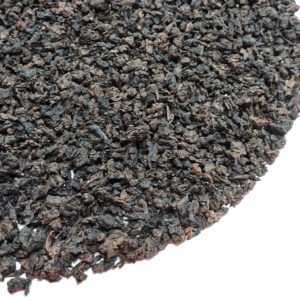
Charcoal-roasting is the traditional ‘finishing’ method for classic oolongs in both China and Taiwan. Roasted oolongs are still popular in Taiwan with tea connoisseurs, as proper roasting will round out the rough ‘green’ edges of a tea that will be drunk young, or allow a tea that is put aside for aging to do so both gracefully and flavorfully.
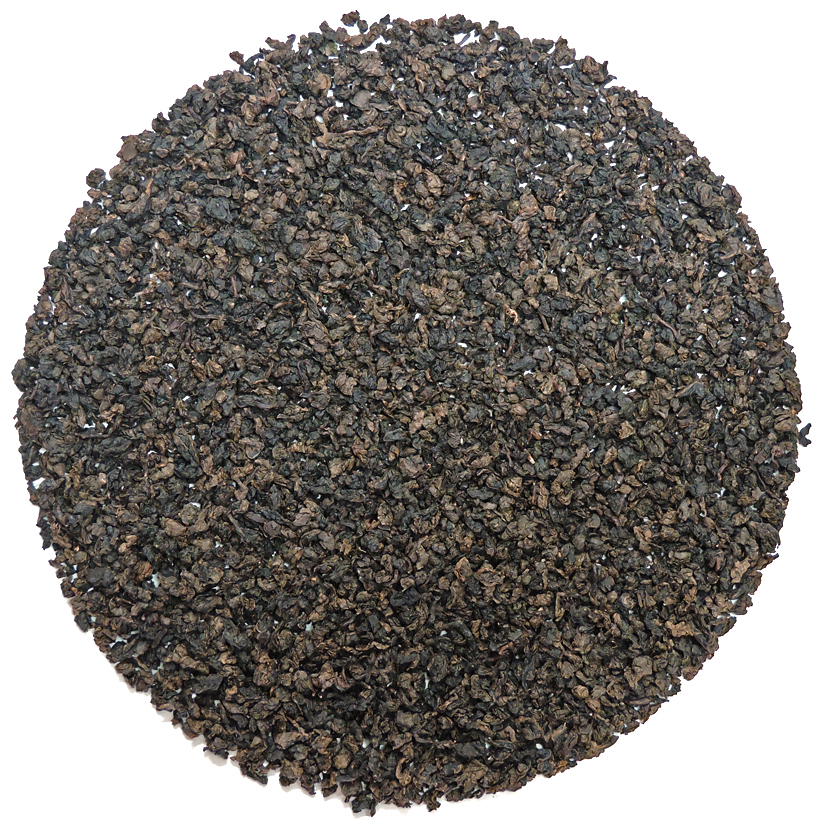
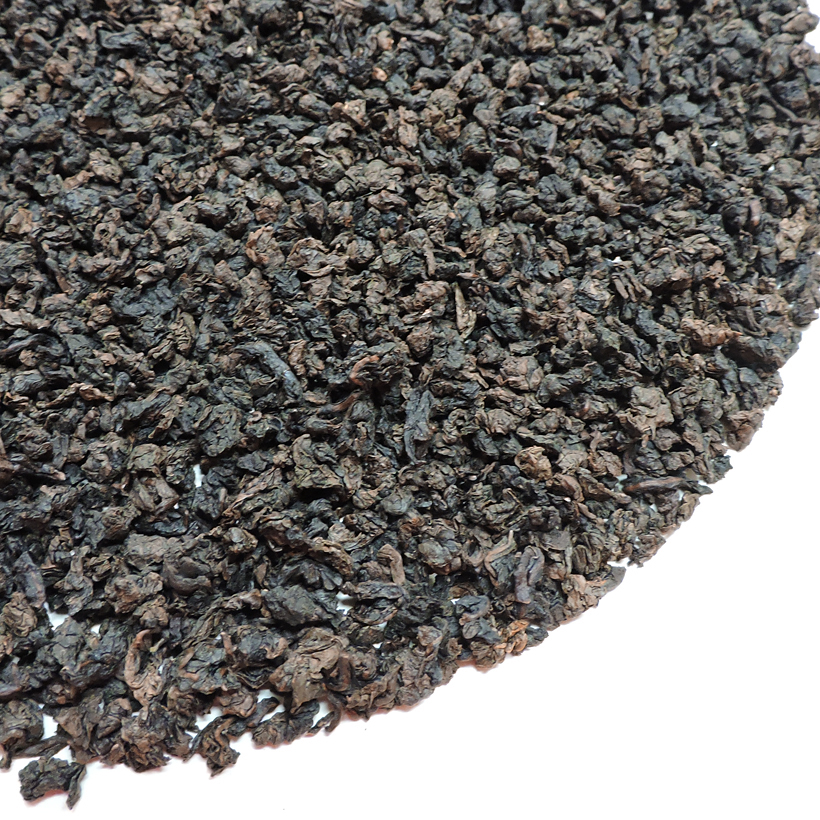
Roasting oolongs over a low ember fire is the traditional style of finish-firing ( drying ) the tea. In fact, the person who fires the tea is considered to be as important to the entire process as are all the workers who manufacture the tea in the tea ‘factory’, (large or small, a modern plant or humble village pavilion). Everything is lost with a charcoal firing gone awry or one that is either too light or too heavy-handed. Look closely at this tea, and instead of individual leaves, you will see medium-sized, irregular balls of leaf with some visible stem attached. The color of this leaf is a deep, army green-brown color; and the finish is quite dull.
While many semiball-rolled style oolongs are made from different tea bush cultivars in the Anxi region (Ben Shan, Huang Jin Gui, Mao Xie and more) , authentic Tieguanyin such as this one has a characteristic and readily identifiable fragrance that sets it apart from other similar oolongs.
Tieguanyin has always been highly prized, and as with all Chinese tea, many grades of quality of this tea exist. Our charcoal-roasted TGY has its origins around the Anxi region, in southern Fujian Province (Min-Nan), the place for semiball-rolled style oolong.
True to form, spring-pluck Tieguanyin has high fragrance and substantial flavor in the cup. The aroma of this tea has a brisk, mineral quality. This is derived from the soil and is reminiscent of the crisp steeliness of minerals (the taste of stones in a mountain stream) a quality that harmonizes well with its inherently bright floral taste, adding complexity and verve to the flavor. A subtle hint of celery may also appear as a vegetal note. Expect a woodsy, tree bark, lingering aftertaste that is the hallmark of a well-made, old-school Tieguanyin.
The lush undertones of this deep-green/brown, hand-rolled oolong are coddled by repeated controlled firing over a low-ember charcoal fire. This is classic Tieguanyin but with less oxidation ( and roasting ) than in the old days.
What materializes in this tea instead of the floral green notes, is a rich symphony of restrained, elegant flavors: honey, stone fruit, a bit of chestnut and pear and of course, the intrinsic, complex, and difficult-to-describe flavor of Tieguanyin leaf. Charcoal-firing lengthens the finish and smooths the sometimes harsh, youthful edges of other semiball-rolled oolongs. This currently-popular style of ‘charcoal-fired’ Tieguanyin has an intriguing background flavor and aroma that we refer to as ‘biscuit’ (petit beurre, or burnt-toast) that does not linger on the palate because of its charcoal-clean finish.
This is a medium-oxidized, traditional-style, semiball-rolled & roasted oolong that is a lovely dark-brown in color. The roasted semiball-rolled oolongs have always been more popular in China, Malaysia and Taiwan than with tea drinkers in the West, particularly Germany & Russia, Canada & the US.
Tea Trekker’s 2018 spring Tieguanyin Charcoal roasted-style oolong can be enjoyed over the course of many short steepings. The infusions will vary, initially being clear and light, then becoming very rich and mouth-filling before finally returning to an aromatic, clear infusion.
NOTE:
This idea works best when the leaf is steeped in a small vessel, but it also works using a large teapot.
The expertly-crimped leaves will swell and open fully, exposing the whole leaf, showing off the lovely crimson-tinged edges of the authentic Tieguanyin leaf. The crimson edging is much more difficult to observe in a roasted oolong than the modern-style ‘clear & fragrant’ style manufacture. However, when steeping, and especially by the 3rd or 4th infusion, the leaves will have opened to an astonishingly large size in the cup. Be sure to pull some out, lay them on a table, and carefully examine the leaves to see the full glory of this type of pluck.
Multiple infusions are necessary to reach the heart of this tea, a totally pleasurable journey.
Want to know more?
 China’s Famous Tea