

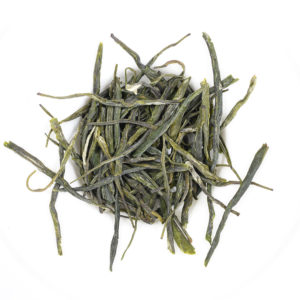
Yua Hua, known as Rainflower Tea here at Tea Trekker, is a particularly unique green tea. Grown and fired in the area around Nanjing in the northeast of China, some consider it to be one of the premier ‘country green’ teas of China.
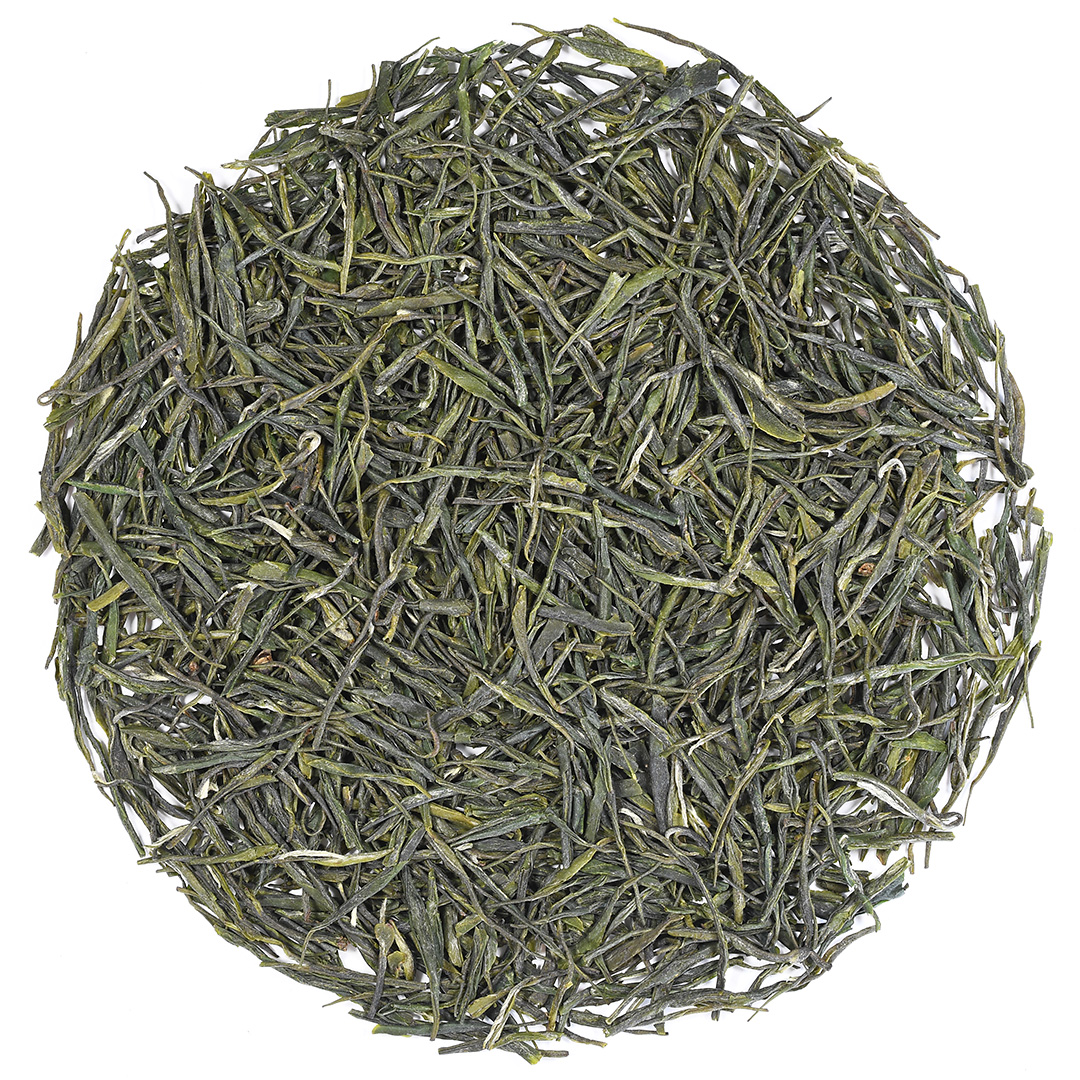
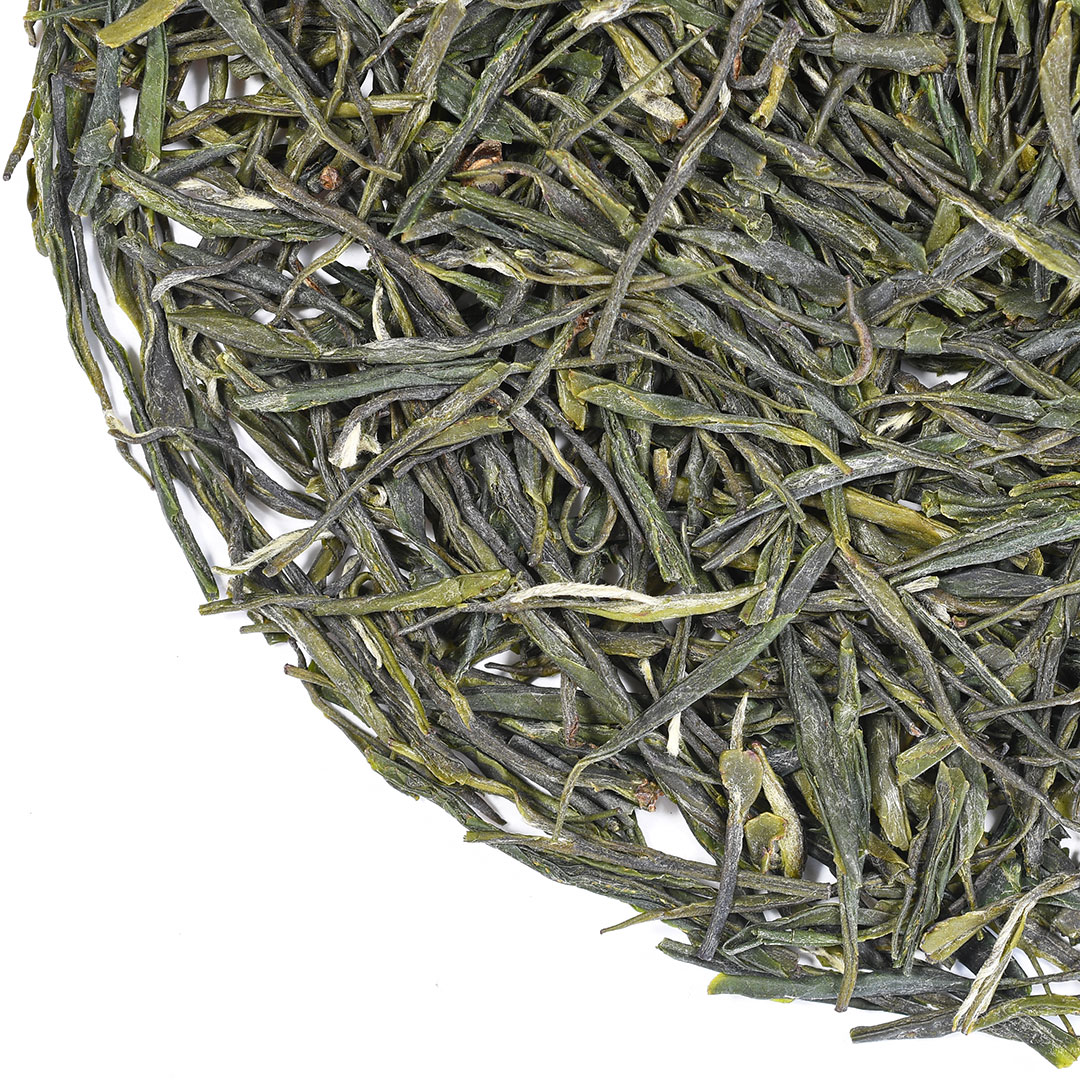
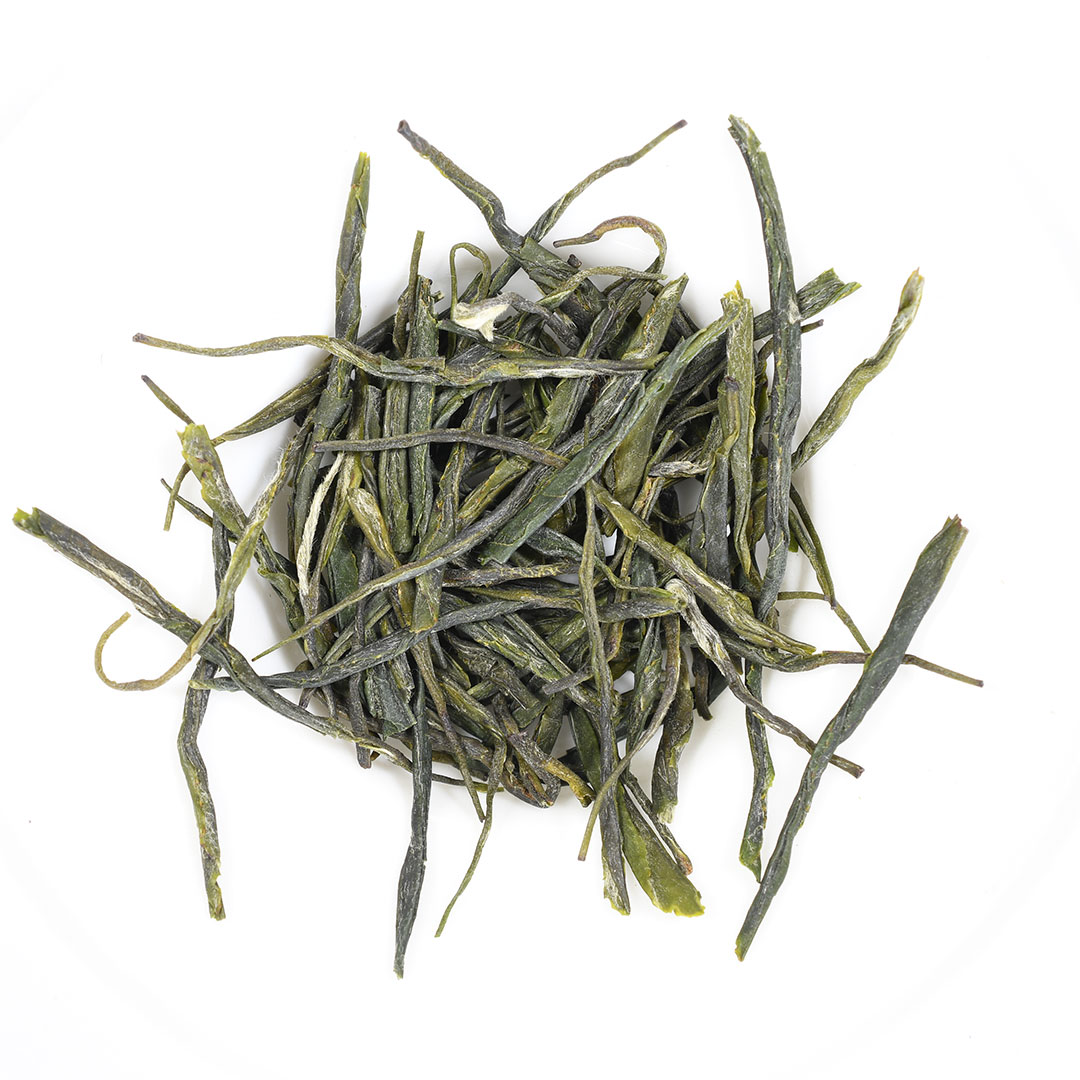
Green teas with an elongated, slender, needle shape, such as Rainflower are difficult to process. This is also an unusual shape for a Chinese green tea, while not so for a Japanese tea. Looking at our photos of this tea, one can imagine how long the fresh leaf must have been in order for the leaf to have shrunk to this extra-long size and shape during the hot firing that dried the leaf to its present size.
We have watched green tea being fired in the manner of Rainflower’s style – it is usually done in a very hot tea-firing pan by only the most experienced of tea-firers. It is very difficult to extract the moisture that is inherent in fresh tea leaf of this size and shape and still maintain the length and slender shape of the leaf when dried. When apprenticing, we are sure that much of this leaf is lost due to its being either not dried enough (in which case it would spoil quickly), or ignites and burns up due to the leaf becoming too hot in the firing pan.
We call this a needle shape leaf, but needle-style green tea can be short, long, extra-long, tubular, flat, sword-like and several other basic profile shapes. Rainflower is what we refer to as a tubular, extra-long needle shape. Before it is re-hydrated, we can actually see that it is slightly bulbous at the stem end and one side has a soft fold to it and the opposite has almost a sharpness, and the leaf comes to a sharp point at the emerging end – this is the challenge of the master firers who produce this wonderful tea.
Only a certain type of cultivar of fresh leaf will form to this shape. In the Nanjing area, local tea artisans have mastered the techniques necessary to form the shape without breaking the leaf or burning the tips or any of the other misfortunes that can ruin fresh leaf when it is improperly handled. This appearance (and taste) shows the terroir of tea and the influence of experience and craft on the finished tea. It is more like making a souffle than an omelet!
Rainflower tea prefers attentiveness when being steeped.
Measurement is critical: use too much leaf and it will be bitter, use too little and it will not seem particularly interesting. The water must be well off the boil, similar to the temperature used for a Japanese green tea, but not too cool or the flavor will hide inside the leaf until the 3rd steeping.
Steep time is short – or bitter elements will sneak into your cup. However, follow the simple steps required for this elegant tea, pay attention while it releases its complex flavors, and you will be in love with this tea forever.
This 2021 lot of spring Rainflower tea is as good as last year’s tea was or possibly is even ‘better’, and rivals any that we have had in the last 20+ years. But beware, our Tea Trekker Premium Rainflower tea will spoil you for other ‘Rainflower’ teas that you may encounter.
Let’s be thankful for such a delicious harvest this year (2021).
Tasting Notes
First Steeping: 60-90 seconds
Second Steeping: 90 seconds to 2 minutes
Third Steeping: 2 minutes
If you like the little bit of ‘bite’ that is normal in the first infusion then that is great; if not, rinse the dry leaf quickly with cool water and then use water for steeping that is at the cooler end of our temperature recommendation: for example 170F. (or add a little cold tap water to the leaf before adding the heated water)
Want to know more?
 What is Tea Leaf ‘Fuzz’?
 Seasonal Teas Explained