

Skip to content
  • Tea Trekker is Closed for ordering - informational site only
  • Subscribe

    Blog sign up

    Subscribe

    Subscribe to our blog to receive notifications of new posts by email.

  • Blog
  • Tea Trekker is Closed for ordering - informational site only
Tea TrekkerTea Trekker
  • Login
  • Menu
  • Home
  • Learn About Tea
    • Tea Education
      • What is Tea?
      • The Six Classifications of Tea
      • Steeping Tea
      • Selecting & Storing Tea
      • Healthful Benefits
      • Traditional Tea vs Commodity Tea
      • New Tea, Rested Tea & Aged Tea
      • Fresh Spring Tea
    • Places of Note
      • China Famous Tea
      • Wu Yi Shan Oolong: yan cha
      • High Mountain Gao Shan
      • Higashiyama Tea
      • Kagoshima Tea
      • Shizuoka Organic Tea Farmers Union
      • About Jun Chiyabari Garden
      • Darjeeling Tea Protected Origin Status
    • Teawares
      • Teapots
      • Teacups
      • Matcha Bowls and Whisks
      • Gaiwans
      • Teaware Accessories
  • Tea by Country & Type
    • Tea by Country
      • Ceylon
      • China
      • India
      • Japan
      • Nepal
      • Taiwan
      • Other Countries
    • Tea by Type
      • Black Tea
      • Green Tea
      • Oolong Tea
      • Pu-erh Tea
      • Hei Cha
      • White Tea
      • Yellow Tea
      • Jasmine, Scented & Smoked
      • Tea Trekker Blends
      • Organic Tea
  • About Tea Trekker
    • About Us
    • Our Books
    • Stories from our Tea Trips
    • What Others Have Said About Us
    • Our Published Articles
    • Photo Gallery
    • Tea Trekker is Now Retired
  • Our Blog
Home / Teawares / Matcha Bowls and Whisks
Matcha Bowl with Sakura Blossoms
Matcha Bowl with Sakura Blossoms - Image 2
Matcha Bowl with Sakura Blossoms - Image 3
Matcha Bowl with Sakura Blossoms - Image 4

Matcha Bowl with Sakura Blossoms

Kiln: Sohoh Kiln
Potter: Sohoh Tanaka
Made in Japan
3.1″ tall
4.5″ wide
Packaged in a wooden box


Shop for Japanese Matcha


NO LONGER FOR SALE
----------------------------
Categories: Matcha Bowls and Whisks, Teawares
Browse Tea
  • Black Tea
    • Ceylon Black Tea
    • China Black Tea
      • — Keemun Black Tea
      • — Lapsang Souchong Black Tea
      • — Yunnan Black Tea
      • — Other Regions Black Tea
      • — All China Black Tea
    • India Black Tea
      • — Assam Black Tea
      • — Bihar Black Tea
      • — Darjeeling Black Tea
      • — Nilgiri Black Tea
      • — Sikkim Black Tea
      • — All India Black Tea
    • Japan Black Tea
    • Nepal Black Tea
    • Taiwan Black Tea
    • All Black Tea
  • Green Tea
    • China Green Tea
    • Japan Green Tea
      • — Fukuoka Green Tea
      • — Matcha
      • — Shizuoka Green Tea
      • — Uji Green Tea
      • — All Japan Green Tea
    • Nepal Green Tea
    • All Green Tea
  • Oolong Tea
    • China Oolong Tea
      • — Fujian Semiball-rolled Oolong
      • — Fujian Strip-style yan cha Oolong
      • — Guangdong dan cong Oolong
      • — All China Oolong Tea
    • Nepal Oolong Tea
    • Taiwan Oolong Tea
    • All Oolong Tea
  • Pu-erh Tea
    • China Sheng Pu-erh
    • China Shou Pu-erh
    • All Pu-erh Tea
  • Hei Cha
  • White Tea
    • China Fujian White Tea
    • China Yunnan White Tea
    • Nepal White Tea
    • All White Tea
  • Yellow Tea
  • Jasmine, Scented & Smoked
  • Tea Trekker Blends
  • Organic Tea
  • 2021 Spring Tea
Browse Teaware
  • Teapots
  • Teacups
  • Matcha Bowls and Whisks
  • Gaiwans
  • Teaware Accessories
  • Description
  • Care & Use of Matcha Bowls:
  • How to Prepare Matcha:

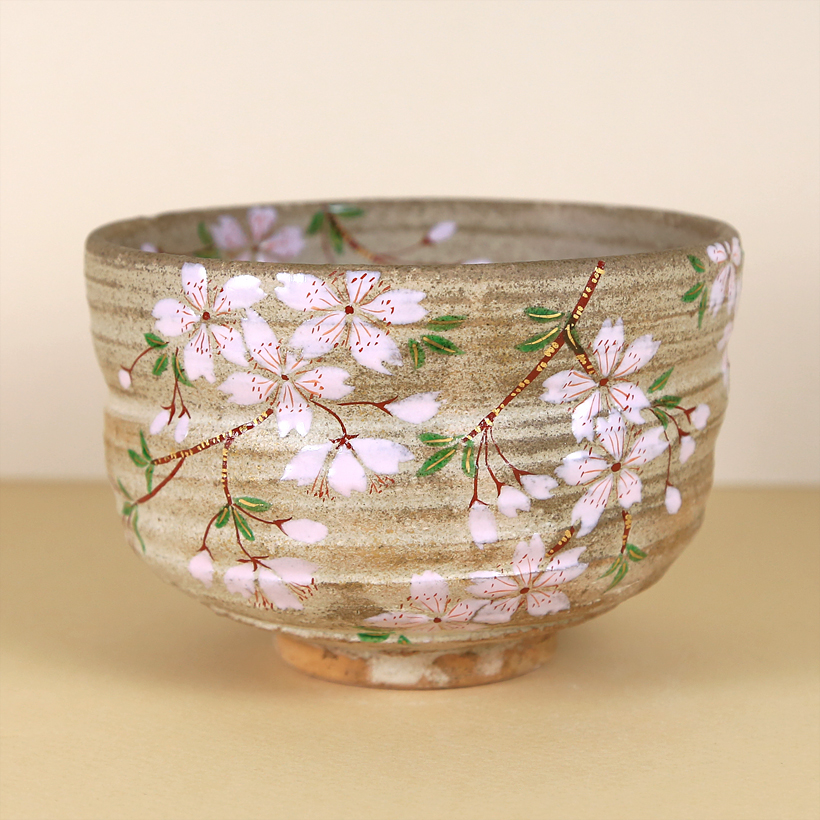
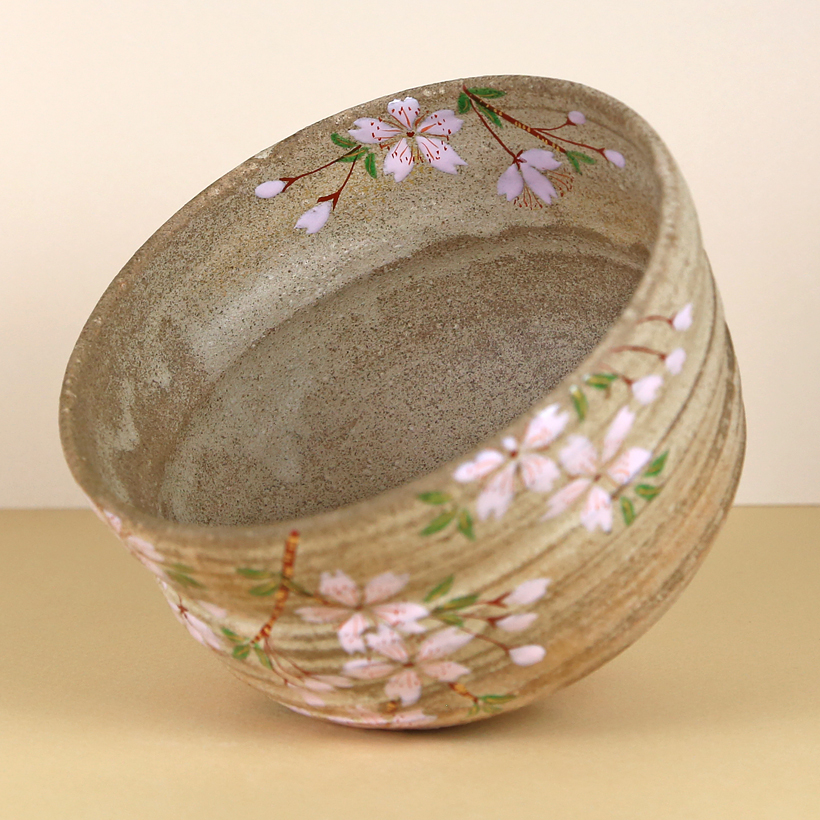
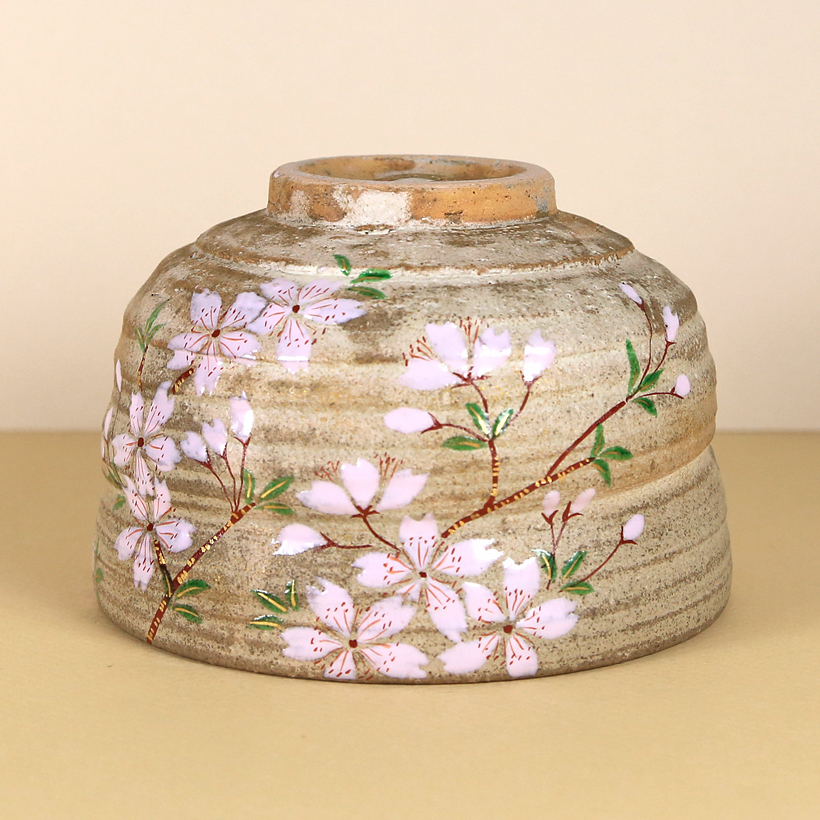
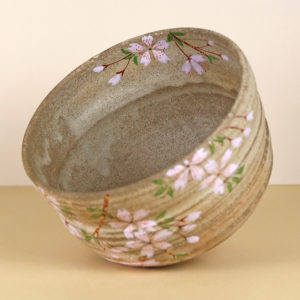
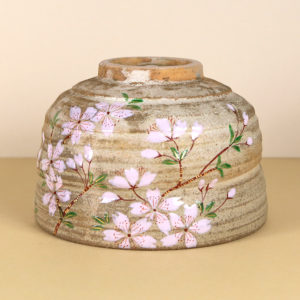
This is a very lovely tea bowl. The potter has utilized some interesting elements to fashion this bowl. While the tea bowl may appear relatively uncomplicated and humble on first glance, there is much going on here in terms of skill and technique.

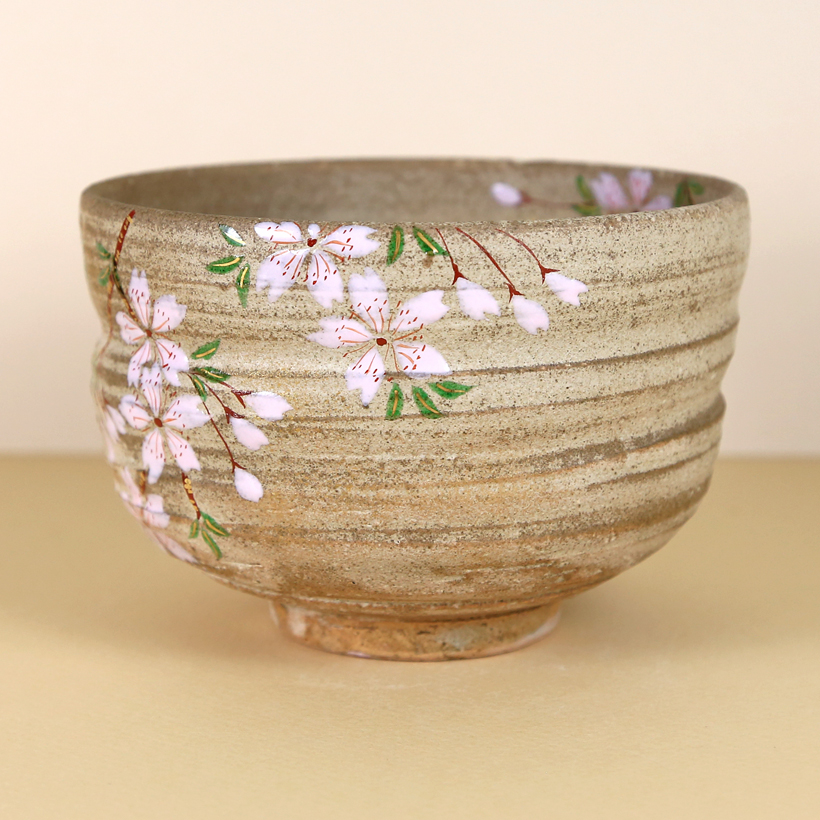
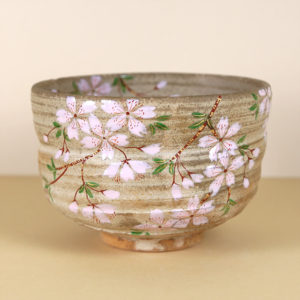
The sakura blossoms are profuse and very well painted. They drape across the front of the tea bowl in a graceful manner, and the branches are rendered equally skillfully. On first appearance and handling the tea bowl appears to be un-glazed and in fact it feels as such, but on a closer look one can begin to notice that the potter has used some very skillful glazing techniques. The glaze treatment is called Undei Yu and it dresses the surface of the tea bowl in a light veil of grey-ish white.

Mr. Sohoh develops his own glazes and for this piece he has used two different glazes. He also fires the tea bowl twice to affect the final appearance.

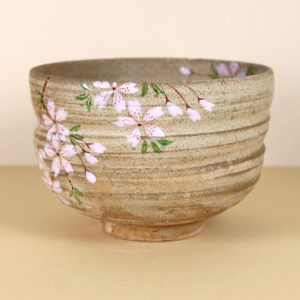
The tea bowl has been given a finger line (gentle, shallow ridges that trail around the circumference of the tea bowl) which adds both visual and tactile texture to the surface. The finger line allows the glazes to sit differently on the two surfaces (inside of the finger line depression and outside of it.) To my eye, the effect of the finger line and the glazing creates a tree-bark like or wood-like appearance that is unusual and quite lovely. The foot-ring appears to be un-glazed and is rough.

This tea bowl is the perfect choice for tea drinkers who appreciate technique that is skillful, subtle, and respecting of the humble wabi sabi aesthetic of tea bowls.

Please Note:
This is a handmade item – slight variations in the painting, colors, tooling, patterning and kiln effects of Chinese and Japanese tea wares are to be expected. We have carefully photographed this item as best as possible – please be aware that different device screens can render colors and subtle tones slightly differently.

Care & Use of Matcha Bowls:

Potters fashion Matcha bowls from various clay in all of the famous pottery making areas of Japan. They are traditionally hand-built from local clay that has been fired in wood, electric or gas fired kilns that do not reach a high internal temperature. As such, Matcha bowls are softer in density and clay structure than porcelain tea wares, which are fired at a very high temperature and whose glaze has bonded with the clay to create a hard, durable piece.


Matcha bowls are made for whisking and drinking powdered green tea and are durable for this use, but are not meant for drinking hotter-temperature types of tea such as black tea. Nor are they meant to be used as a teapot substitute for steeping loose-leaf tea.


In Japan and Korea much attention is paid to the unique characteristics of handmade pottery, and this includes all of the variables that make a handmade piece unique. A drippy glaze, a slightly lopsided lip, a finger mark in the glaze, etc, are examples of character that shows ‘the hand’ of the maker.


Matcha bowls can develop glaze cracks on the inside and outside surfaces of the clay depending on the type of clay and the type of glaze the bowl has been given. Cracks that appear only in the glaze with used (as opposed to cracks in the actual clay body) do not leak or weaken the vessel. Glaze cracks  and are held in high regard by tea drinkers, tea wares collectors and potters. It is the ‘voice of the clay’ speaking, and is viewed as the piece contributing some ‘self-patterning’ to the surface appearance. No two pieces of pottery will ever be exactly the same when the glaze develops a unique pattern of distinguishing glaze cracks from use.


Owning a Matcha bowl requires thoughtful handling and careful use.


Matcha bowls are not intended for use in a microwave or dishwasher. These tea bowls are meant to be simply rinsed and air-dried on a kitchen towel on the counter-top after use. Using Matcha bowls for tea other than powdered green tea can result in introducing water to the bowl that is too hot – this will encourage more glaze cracking to develop.


Please be aware that some foot-rings on Matcha bowls are intentionally not glazed and that un-glazed clay can be rough. While foot-rings such as these are considered desirable, one should take care to protect wooden table surfaces, counter-tops, and stainless-steel surfaces from being scratched.

How to Prepare Matcha:

img-how_whisk How to Whisk a Bowl of Matcha

Help
  • Account Information
  • Terms & Conditions
  • Privacy Policy
  • Contact
 Learn
  • Types of Tea
  • Types of Teawares
  • Tea Education
  • Places of Note
About
  • About Tea Trekker
  • Photo Gallery
  • Facebook
  • Newsletter Sign-up
  • Blog
Recent Blog Posts
  • 16
    Oct
    Welcome to the new Tea Trekker Blog Comments Off on Welcome to the new Tea Trekker Blog
Copyright 2026 © Tea Trekker
  • Home
  • Learn About Tea
    • Tea Education
      • What is Tea?
      • The Six Classifications of Tea
      • Steeping Tea
      • Selecting & Storing Tea
      • Healthful Benefits
      • Traditional Tea vs Commodity Tea
      • New Tea, Rested Tea & Aged Tea
      • Fresh Spring Tea
    • Places of Note
      • China Famous Tea
      • Wu Yi Shan Oolong: yan cha
      • High Mountain Gao Shan
      • Higashiyama Tea
      • Kagoshima Tea
      • Shizuoka Organic Tea Farmers Union
      • About Jun Chiyabari Garden
      • Darjeeling Tea Protected Origin Status
    • Teawares
      • Teapots
      • Teacups
      • Matcha Bowls and Whisks
      • Gaiwans
      • Teaware Accessories
  • Tea by Country & Type
    • Tea by Country
      • Ceylon
      • China
      • India
      • Japan
      • Nepal
      • Taiwan
      • Other Countries
    • Tea by Type
      • Black Tea
      • Green Tea
      • Oolong Tea
      • Pu-erh Tea
      • Hei Cha
      • White Tea
      • Yellow Tea
      • Jasmine, Scented & Smoked
      • Tea Trekker Blends
      • Organic Tea
  • About Tea Trekker
    • About Us
    • Our Books
    • Stories from our Tea Trips
    • What Others Have Said About Us
    • Our Published Articles
    • Photo Gallery
    • Tea Trekker is Now Retired
  • Our Blog
  • Login
  • Subscribe
  • menu

Login

Lost your password?